|
The Los Angeles river was the primary reason for settling there, but the actual location of the pueblo was relocated
twice as heavy rains tended to cause the river to flood over. Eventually small living structures were
erected and land grants were given to the pobladores and soldiers. Larger acres of land later gave way to emerging ranchos,
which became the norm as the town spread.
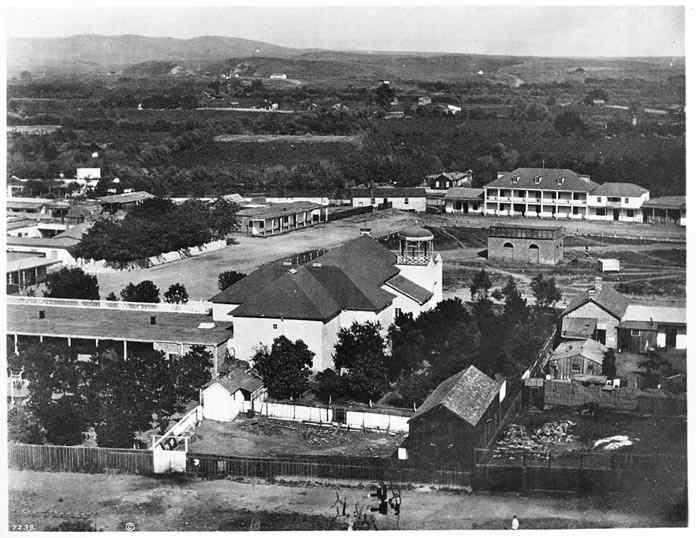
|
| 100 years later, the plaza sometime before 1875 - notice brick reservoir in middle ground |
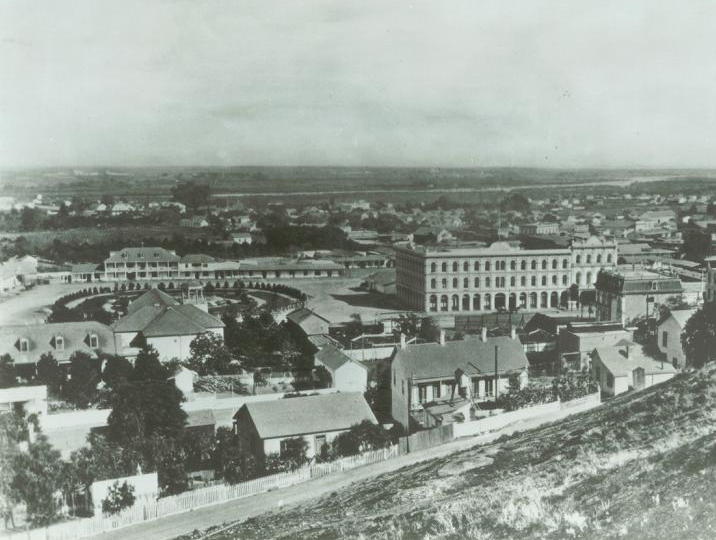
|
| A few years later a fountain replaced the reservoir and trees were planted encircling the plaza |
The Quintero legacy would eventually return to Los Angeles. A
A Spanish soldier named Manuel Nieto was given 300,000 acres of land for his military service. Later land disputes with
Mission San Gabriel cost him nearly half the land, but he retained an area stretching from northern Whittier to the Pacific
ocean in the south, and from the LA river to the west and the Santa Ana River to the east, which includes an area that would
become Long Beach, my hometown. His children would inherit his land and daughter Manuela Cota received 27,000 acres of the
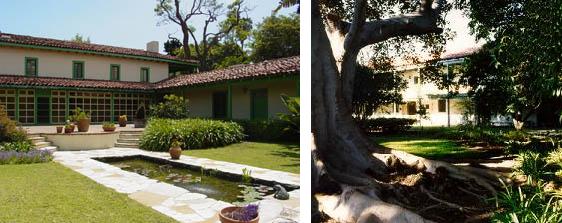
area known as Rancho Los Cerritos. Upon her death, the property was sold to Yankee-settler John Temple who built the two-story
adobe structure, the most expensive home in Southern California at the time, which still stands today and open to the
public for tours.
|
| The beautiful two-story Spanish-Mexican adobe house at Rancho Los Cerritos |
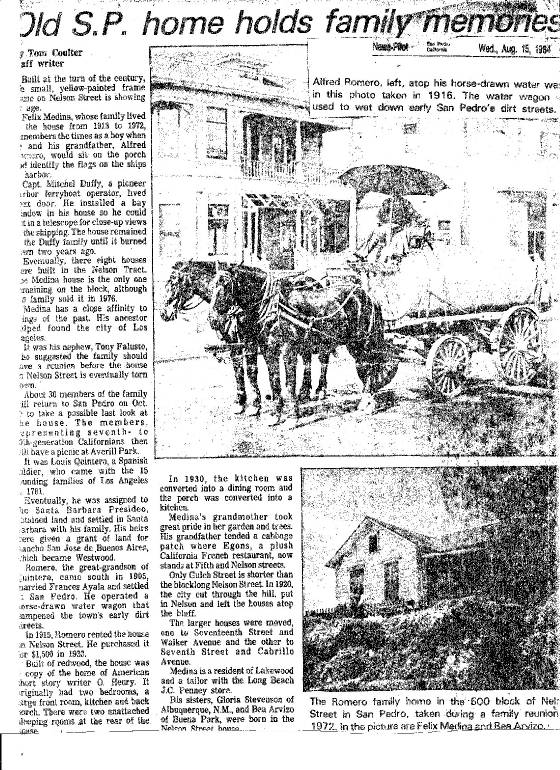
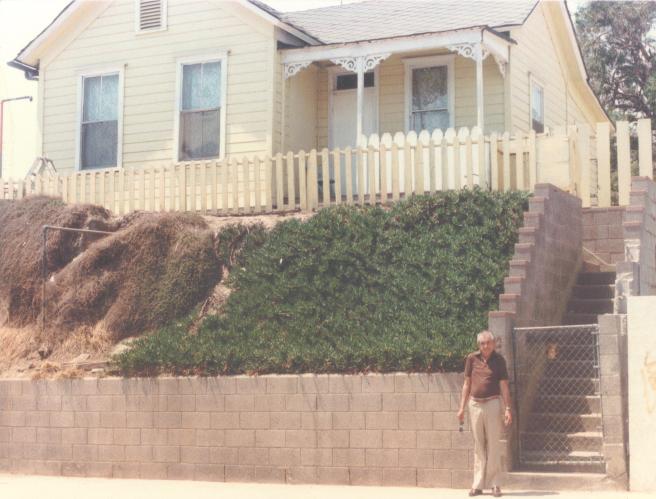
A little house on Nelson Street in San Pedro has lots of history for my family from 1913 to 1972. Over
time, my cousin Felix's sisters Gloria and Bea, my grandmother Pauline, and my father, Albert Leon IV, were all born there!
The San Pedro Historical Society had been active preserving the house as the area was being developed commercially,
and laws prevent it from being demolished to this day. At one point Felix was offered the house as a gift, but he could not
find an affordable empty lot to relocate the house to. Years later, the same deal was offered to me where my
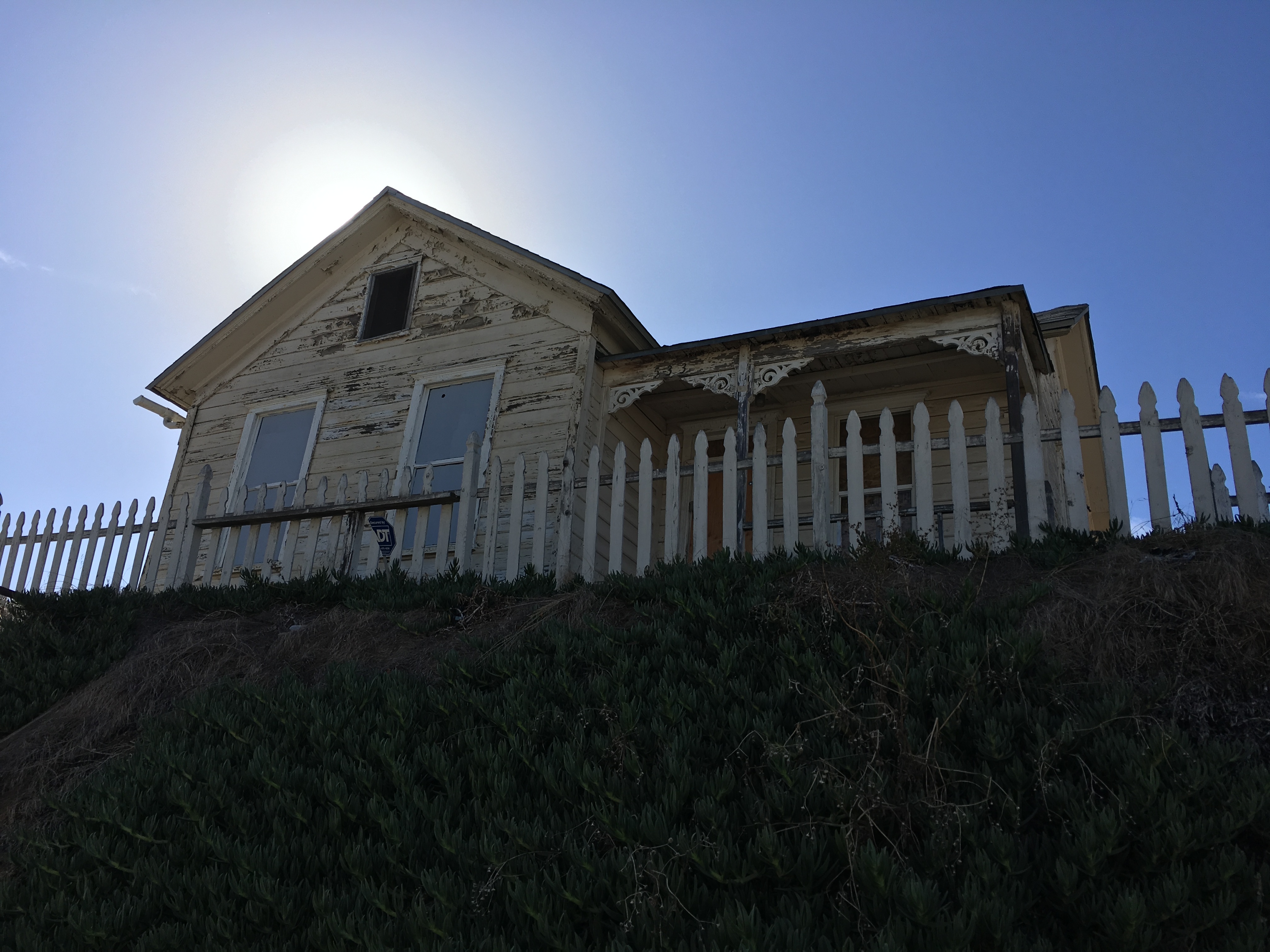
wife and I experienced the same problem. The house became rental property into the late 90s. Today it is empty and
dilapidated. (See newspaper article below about the Nelson house - Quintero mistakenly mentioned as a
Spanish soldier)
|
| Felix at Nelson House sometime in the 80s |
|
| Nelson house in 2017 |
|